
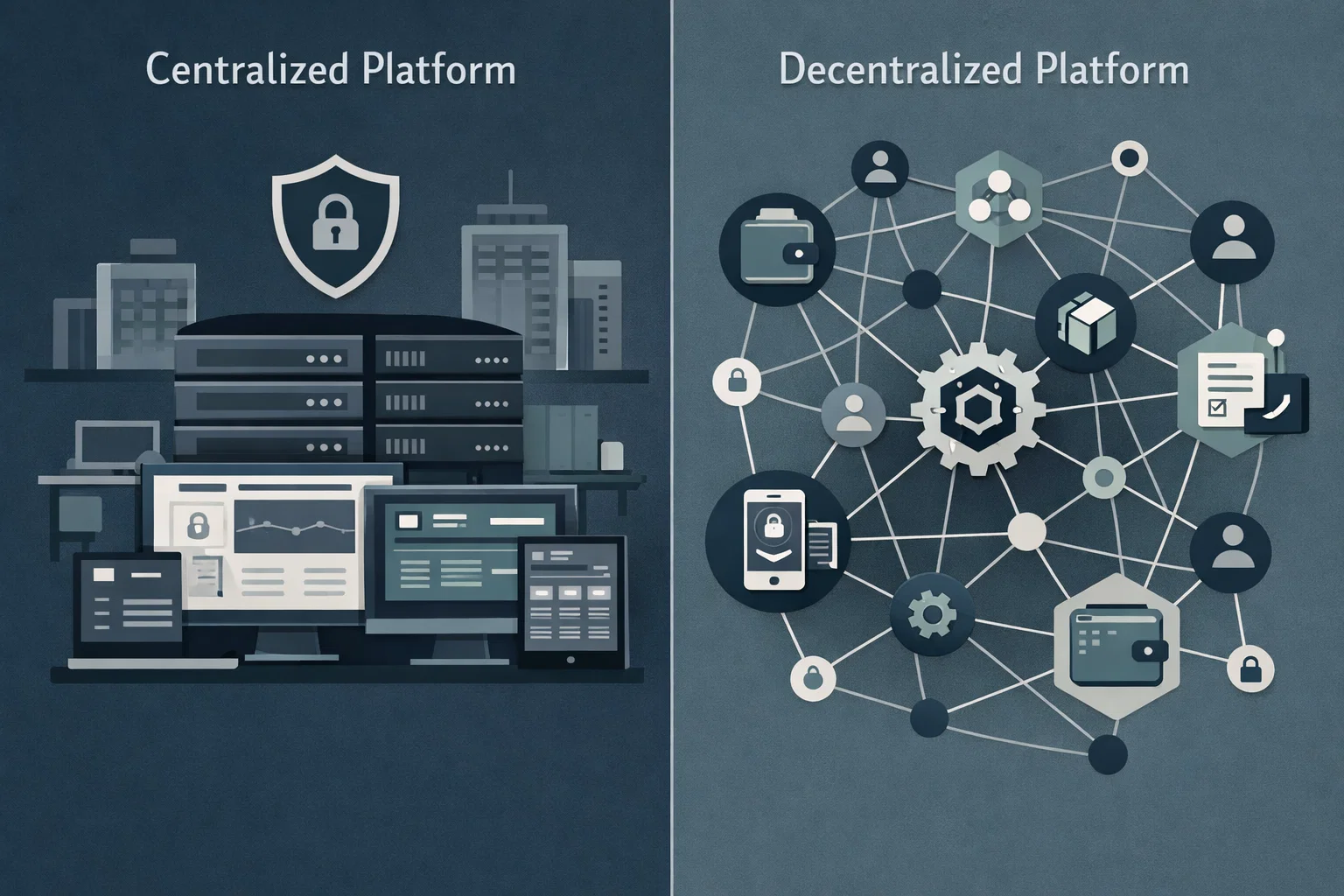
In the rapidly evolving digital landscape of 2025, the choice between centralized exchanges (CEXs) and decentralized exchanges (DEXs) is no longer a binary decision between ease and ideology. Instead, it has become a strategic calculation based on specific needs, risk tolerance, and the shifting regulatory environment.
The Current State of Centralized Exchanges (CEX)
Centralized exchanges like Binance and Coinbase continue to function as the primary gateways to the crypto world, acting as trusted intermediaries that match buyers and sellers while managing user accounts. Their dominance in 2025 is largely sustained by their role as the most reliable fiat-to-crypto on-ramps, allowing users to deposit and withdraw local currency with ease.
Pros of CEXs:
- User Experience: They offer intuitive, mobile-friendly interfaces similar to traditional banking apps, complete with dedicated customer support—a feature almost entirely absent in the decentralized world.
- Speed and Liquidity: By matching trades internally on off-chain order books, top-tier CEXs like Binance can process over a million transactions per second with near-instant latency. This deep liquidity ensures tight spreads and minimal slippage, even for large institutional orders.
- Institutional Safety Nets: Many CEXs now implement advanced security such as cold storage and insurance policies (e.g., Binance’s SAFU fund) to protect against hacks.
Cons of CEXs:
- Custodial Risk: The “not your keys, not your coins” mantra remains relevant. Users must trust the exchange to safeguard their private keys; if the platform suffers a security breach or insolvency, user funds are at significant risk.
- Privacy Concerns: In compliance with strict 2025 global regulations like the EU’s MiCA, CEXs require mandatory Know Your Customer (KYC) documentation, which can compromise user anonymity.
The Rise of Decentralized Exchanges (DEX)
DEXs, such as Uniswap and dYdX, operate without a central authority, instead using smart contracts on a blockchain to execute peer-to-peer trades. In 2025, the DEX-to-CEX spot trading volume ratio reached record highs, peaking at 23%, as technological advancements narrowed the gap with centralized competitors.
Pros of DEXs:
- Self-Custody and Control: Users retain full sovereignty over their assets and private keys at all times. This eliminates the counterparty risk of exchange insolvency.
- Permissionless Privacy: Most DEXs allow for anonymized trading simply by connecting a digital wallet, without the need for personal data or KYC verification.
- DeFi Innovation: They provide exclusive access to yield farming, liquidity provision, and early-stage token listings that haven’t yet reached major exchanges.
Cons of DEXs:
- Complexity and Barriers: Using a DEX requires specialized knowledge of Web3 wallets, gas fees, and blockchain mechanics. There is no “forgot password” button if you lose your private keys.
- Technical Risks: While they avoid custodial risk, they are vulnerable to smart contract exploits or governance loopholes that can result in the permanent loss of funds.
- Variable Performance: Transaction speeds depend on the underlying blockchain network. During periods of heavy congestion, users may face slow settlement times and exorbitant gas fees.
The 2025 Regulatory Shift
The year 2025 marked a turning point as jurisdictions moved from “enforcement-first” to “rules-first” frameworks. The EU’s MiCA (Markets in Crypto-Assets) regime is now fully operational, providing a clear licensing path for crypto-asset service providers across its member states. Similarly, the US passed major federal stablecoin legislation, bringing much-needed clarity to the market. While these rules primarily target centralized entities, regulators are increasingly scrutinizing DEXs for token concentration risks and cross-chain compliance.
The Hybrid Future: “CeDeFi”
The most significant trend in 2025 is the emergence of a hybrid model often called “CeDeFi”. Major players like Binance and OKX have integrated Web3 wallets directly into their CEX interfaces, allowing users to interact with decentralized protocols while still enjoying a centralized platform’s security and ease of use.
For most investors, the ideal strategy is now a combined approach:
- Use a CEX for fiat conversions, high-frequency trading, and large-volume derivatives.
- Use a DEX for long-term self-custody of assets, exploring niche tokens, and participating in advanced DeFi yield strategies.
Ultimately, whether you prioritize the convenience and support of a CEX or the autonomy and privacy of a DEX, the infrastructure of 2025 finally allows for a more secure and diverse trading experience than ever before.

Alex R. Bennett is a cryptocurrency analyst and content strategist with over 7 years of experience in digital assets, DeFi, and blockchain-based investing. After navigating the volatile crypto markets since 2017, Alex launched CoinBuyingTips to help everyday investors make smarter, research-backed decisions.
A strong advocate for transparency and independent research, Alex has written for several industry publications and is known for turning complex tokenomics into clear, actionable insights. When not diving into token whitepapers, Alex hosts webinars and publishes deep-dive reviews that help demystify crypto for the mainstream audience.